
How to Fill Copyright & Music Publishing Forms
Copyright and music publishing forms collect the facts that identify a song, its creators, recording, ownership, and payment rights. Fill them out using legal names, accurate song data, agreed ownership percentages, and matching registration details. Review every field against your split sheet and contracts before submitting.
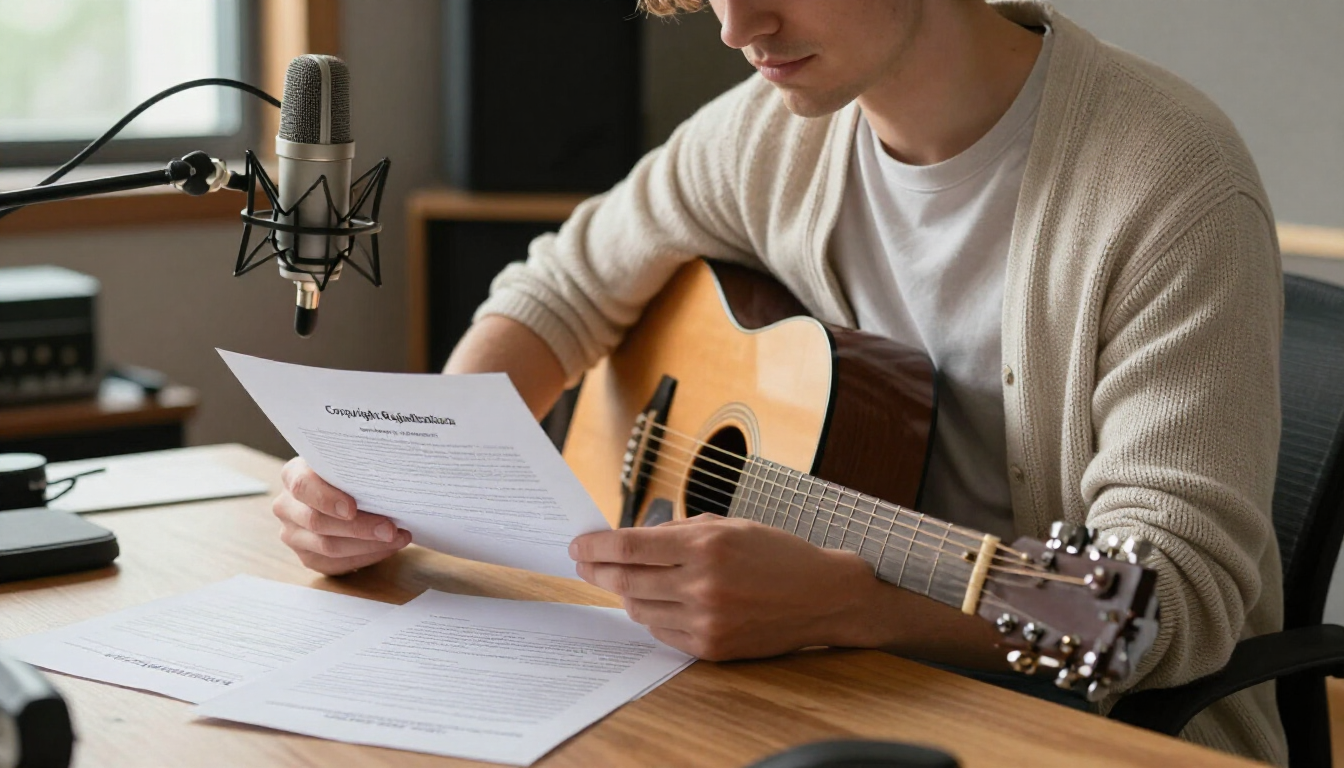
What information should you prepare first?
Gather your information before opening a registration or publishing form. Preparing everything in advance reduces incomplete answers, inconsistent spellings, and ownership mistakes.
Create a simple folder containing:
- Your legal name, professional name, email, address, and preferred contact details
- The song title, alternate titles, language, genre, and completion date
- Every songwriter, composer, lyricist, producer, and publisher connected to the work
- Ownership percentages and signed split-sheet or collaboration agreements
- Recording details, including the artist name, release date, label, and recording owner
Keep legal names separate from stage names. A performer may be known publicly by an artist name while copyright records require their government name. If a form asks for both, enter each in the appropriate field rather than replacing one with the other.
It also helps to review the educational material in your Resources area before submitting music-related paperwork. The goal is not to rush through a form; it is to create a consistent record that can be understood by administrators, publishers, collection societies, and collaborators.
Which type of music right are you registering?
A common source of confusion is treating a song and a recording as the same work. They are related, but they can involve different rights and owners.
The musical composition
The composition includes the underlying melody, lyrics, harmony, and arrangement. Songwriters, composers, and lyricists generally contribute to this copyright. A publishing registration usually focuses on this work and the people or companies that control it.
The sound recording
The sound recording, sometimes called the master, is a specific recorded performance of the composition. The recording artist, label, or another financing party may own it, depending on the agreement.
Before completing a form, identify whether it concerns:
- The composition or song itself
- A sound recording or master
- A license, assignment, publishing administration, or royalty account
- A performance, mechanical, synchronization, or neighboring right
If the form is unclear, read its instructions carefully and ask the relevant organization for guidance. Do not assume that registering one right automatically registers every other right.
How do you complete each section correctly?
1. Enter the work title consistently
Use the official title exactly as it appears in your agreements, release plan, and metadata. Check punctuation, capitalization, featuring credits, version labels, and alternate titles. If the work is an instrumental, unreleased, or part of a larger project, follow the form’s instructions for those details.
Avoid using several informal titles for the same song. Small differences can make searches and royalty matching more difficult. If the form provides a field for an alternate or previous title, use it instead of creating a separate registration unnecessarily.
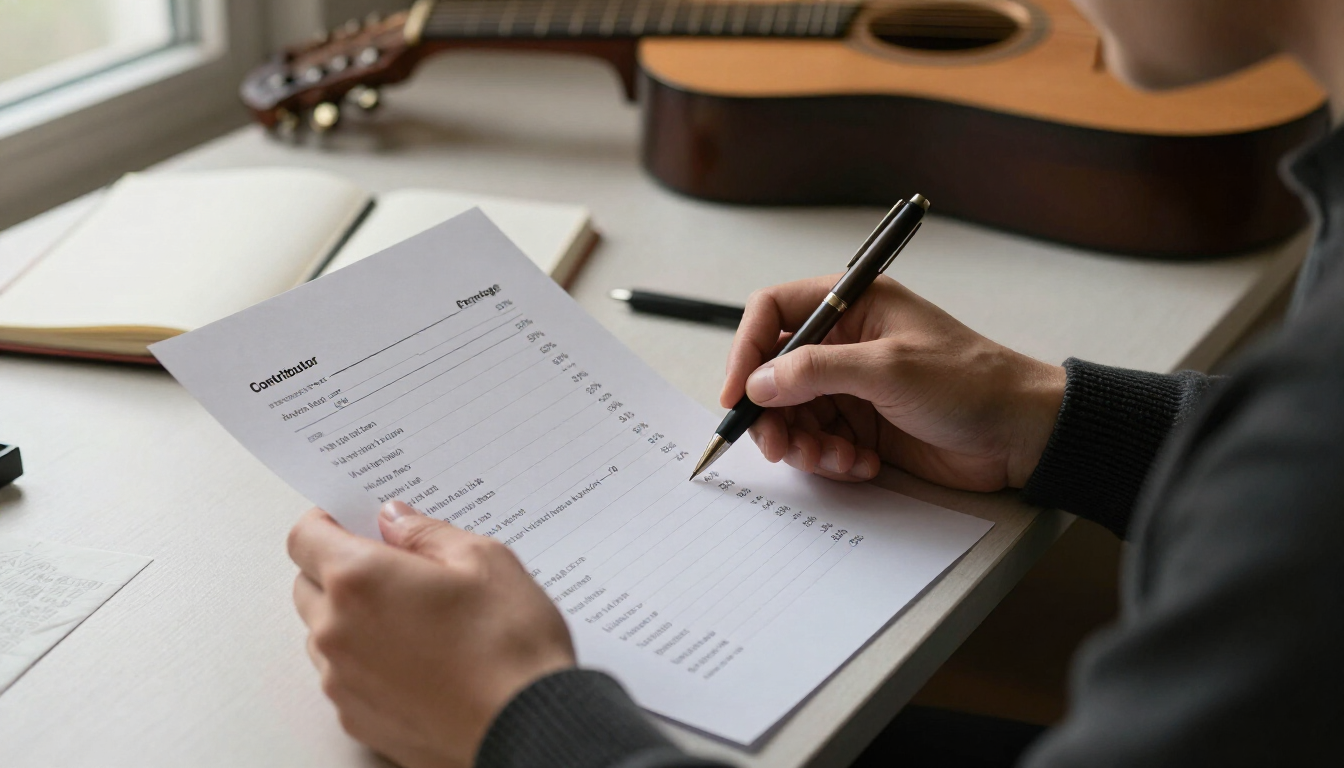
2. List every contributor
Include all eligible contributors, not only the lead artist. Depending on the work and agreement, contributors may include co-writers, lyricists, composers, arrangers, producers, or adaptors.
For each person, check:
- Legal name and professional name
- Role in the composition or recording
- Contact information, if requested
- Performing rights organization or collection society affiliation
- Membership, account, or identifier number
Never add or remove a contributor based on memory alone. Compare the form with your signed split sheet, collaboration messages, producer agreement, or publishing contract. If a disagreement exists, pause the submission and resolve the ownership issue in writing.
3. Assign ownership percentages
Ownership percentages should reflect the written agreement among contributors and total 100 percent. If there are four equal writers, each may receive 25 percent, but never presume equal shares unless the collaborators agreed to that arrangement.
Check whether the form distinguishes between writer share and publisher share. Some systems also ask for separate percentages for composition rights, administration, or territorial control. Enter percentages in the exact categories requested, and make sure the totals are mathematically correct.
4. Add publisher and administrator details
If you self-publish, the form may require you to identify yourself as the publisher or to provide a publishing entity name. If a publisher or administrator controls some or all rights, enter the legal company name and account details exactly as shown in the contract.
Do not list a company as an owner unless your agreement supports that claim. A publishing administrator may manage registration and royalty collection without owning the copyright. The distinction matters, so read the contract and the form definitions together.
5. Describe the recording accurately
For a sound recording form, provide the recording title, featured artist, version, release date, label information, and unique identifiers when available. An identifier such as an ISRC can help distinguish one recording from another, while a composition identifier may apply to the underlying song.
If you are registering an unreleased track, follow the organization’s rules for unreleased material. Do not invent a release date or identifier simply to complete a required field.
What should you check before submitting?
Use a final review checklist before clicking submit or mailing a paper form:
- Confirm every name, title, date, identifier, and email address
- Verify that ownership percentages add up to 100 percent where required
- Compare the form with signed agreements and your split sheet
- Confirm that you selected the correct work type and rights category
- Save a copy of the completed form, attachments, and confirmation number
Look for common errors such as a missing co-writer, swapped first and last names, a misspelled publisher, duplicate registrations, or a percentage entered in the wrong column. Check that supporting files are readable and use the requested file format.
If another contributor must approve or sign the submission, confirm that their step is complete. A form can appear finished while remaining pending because one collaborator has not verified their information.
How can you avoid common copyright form mistakes?
The safest approach is to slow down at the points where assumptions are most likely. Use these habits:
- Do not copy old metadata blindly. Older releases may contain outdated contributor names or percentages.
- Do not confuse credit with ownership. A performer or producer may receive a credit without owning the composition.
- Do not estimate identifiers. Use official numbers from the correct distributor, label, or rights organization.
- Do not submit conflicting claims. Resolve differences with collaborators before multiple parties register incompatible information.
- Do not ignore territory and term language. Contracts may limit what a publisher or administrator can control.
For complex collaborations, samples, co-publishing arrangements, estates, or disputed ownership, consider speaking with an entertainment attorney or qualified music-rights professional. General information can help you organize documents, but it does not replace advice about your specific agreement or jurisdiction.
Frequently asked questions
Do I need a separate form for the song and the recording?
Often, yes. A composition and a sound recording are separate copyrighted works, and different organizations or systems may collect information about them. Read the form’s scope before submitting and keep the two sets of ownership details distinct.
What if I do not have a publisher?
You may be able to register as a self-published writer or rights owner, depending on the organization. Use your legal name or properly formed business name, and do not create a fictional publisher entry just to fill a blank.
Can I update a form after submitting it?
Many organizations provide correction or amendment procedures, but the process varies. Save your confirmation details, identify the exact error, and contact the organization promptly. Avoid creating a second registration unless its instructions tell you to do so.
Should my artist name appear on the form?
Usually, include your legal name where ownership or identity is requested and your artist name where the form asks for a performing or public name. Follow the field labels carefully so both identities connect correctly.
Where can musicians find more support?
Final checklist for your next submission
Properly completing copyright and music publishing forms means documenting the song, recording, contributors, ownership, and administration details consistently. Prepare your legal names and agreements first, identify which right the form covers, then verify every percentage and identifier before submitting. This process is especially useful when several musicians collaborate, a publisher is involved, or a release includes multiple versions. Save the final record and confirmation number, and ask for professional guidance when contracts or ownership claims are complicated. Before your next submission, compare the form with your signed paperwork and correct uncertainties rather than guessing.
Recent Posts